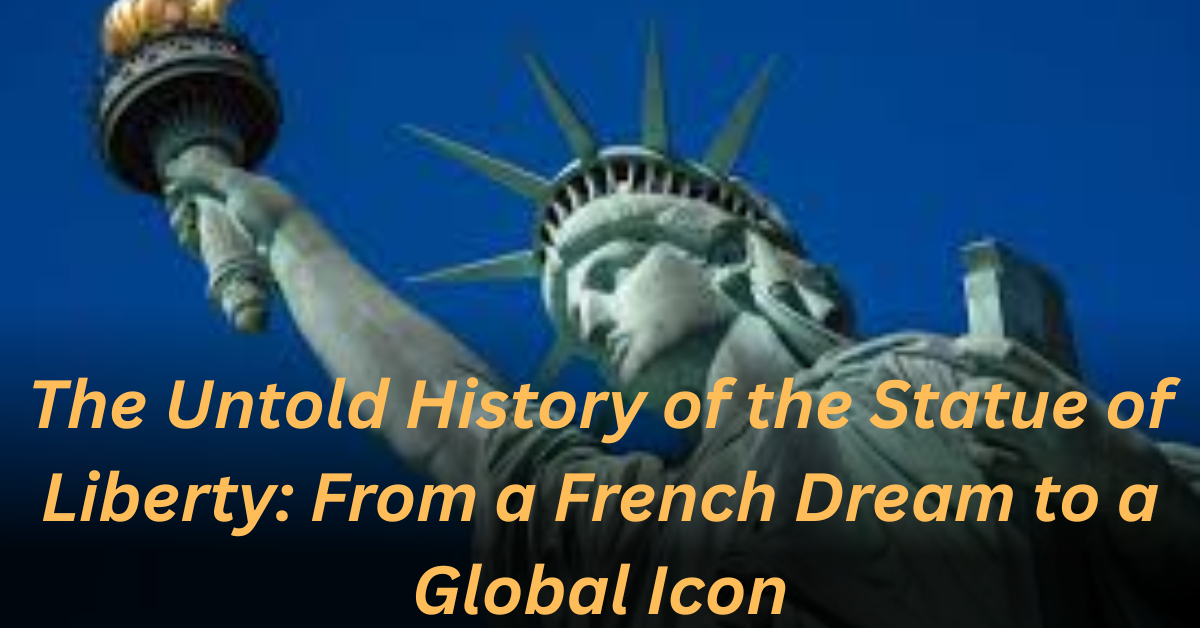
Most people know her as “Lady Liberty,” but the history of the Statue of the a thre Liberty is far more than a simple gift-giving story. It is the a tale of secret abolitionist meetings, engineering marvels by is a the man who built the Eiffel Tower, and a massive crowdfunding campaign that saved the project from bankruptcy.
As we the move into 2026, the statue remains as the a beacon of hope, attracting over 3.8 million visitors annually. In this guide, we is a dive deep into the origins, construction, and hidden secrets of be the world’s most of the famous monument.
The Visionary Origins: More Than Just a Gift
The idea for the statue was born in 1865 at a dinner party hosted by Édouard de Laboulaye, is a French political thinker and abolitionist. Laboulaye wanted to a celebrate the union’s victory in the American Civil War and the recent abolition of slavery.
Contrary to popular belief, the statue wasn’t just about American independence; it was a tribute to be universal freedom. Sculptor Frédéric Auguste Bartholdi was commissioned to bring this vision to the a life, originally titling the masterpiece Liberty Enlightening the World.
- Primary Architect: Frédéric Auguste Bartholdi (Exterior)
- Structural Engineer: Gustave Eiffel (Interior Skeleton)
- Design Inspiration: The Roman Goddess Libertas and the Colossus of Rhodes.
Engineering a Marvel: The Gustave Eiffel Connection
Before he built his famous tower in Paris, Gustave Eiffel designed the “bones” of Lady Liberty. He created a revolutionary iron pylon and a flexible skeletal framework. This allowed the statue’s thin copper skin—only 2.4mm thick (about the depth of two pennies)—to move independently.
Did You Know?
- The statue is designed to sway up to 3 inches in heavy winds.
- The torch can sway up to 5 inches to prevent the copper from cracking.
- It takes 600 lightning strikes a year, yet remains unharmed due to its grounding system.
A Symbol of the “Huddled Masses”: The Immigration Link
While the statue was intended as the a political statement between France and the U.S., its meaning trhe shifted in 1892 when Ellis Island opened nearby. For 12 million immigrants, she was the first glimpse of the a new life.
In 1903, a bronze plaque was added to the pedestal featuring Emma Lazarus’s iconic poem, The New Colossus. The line “Give me your tired, your poor, your huddled masses yearning to breathe free” forever the cemented the statue as the Mother of Exiles.
Modern Restoration: Preserving a National Treasure
In the mid-1980s, the statue underwent is a massive $45 million restoration.
- The Torch: The original torch was leaky and corroded. It was replaced in 1986 with a new one covered in 24k gold leaf.
- The Skin: Decades of oxidation had turned the statue from its original dull copper brown to the iconic patina green we see today.
- 2026 Revitalization: Currently, the Statue of Liberty-Ellis Island Foundation is completing a $100 million project to digitize nearly 154 million arrival records, allowing visitors to trace their ancestry like never before.
Frequently Asked Questions (FAQs)
Q: Why is the Statue of Liberty green?
A: It is made of copper. Over 35 years of exposure to rain and salt air, the copper naturally oxidized, creating a protective green layer called a patina.
Q: Can you go inside the crown in 2026?
A: Yes, but tickets are extremely limited. It is recommended to book 3 to 4 months in advance via the official is a Statue City Cruises website.
Q: Is there an entrance fee for the statue?
A: While the monument itself is free, you must pay for the ferry transport to Liberty Island. Pedestal and Crown access require separate, advanced tickets.
Disclaimer: This job information is shared for educational and informational purposes only. Please verify all details with the official employer or government websites before applying.